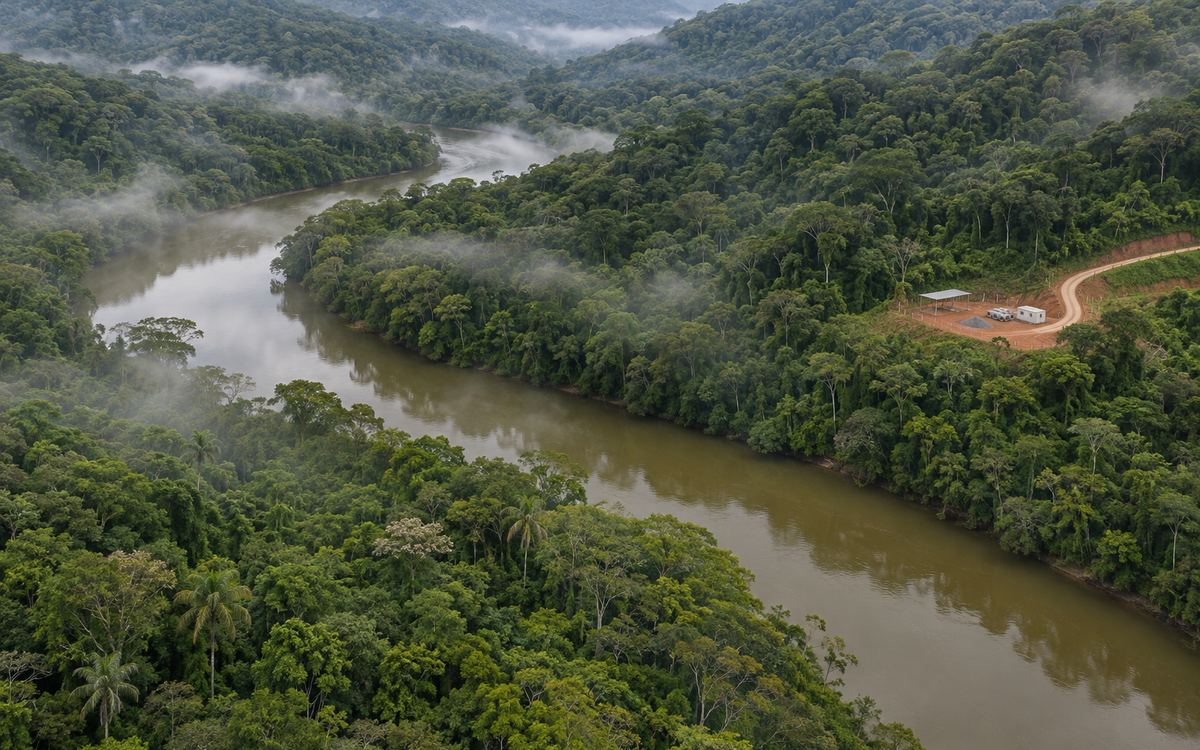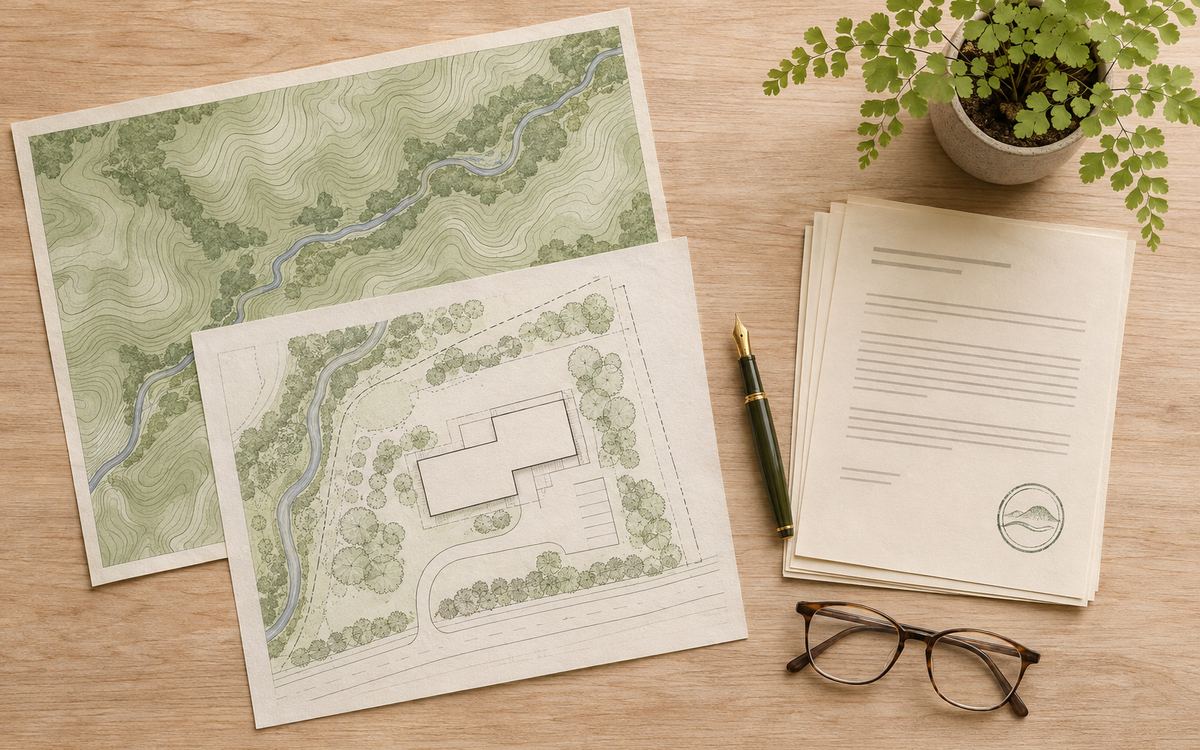
Brazilian environmental law is not a single block. It is a set of statutes, resolutions and local rules that overlap, and that looks different depending on the state, the municipality and the type of activity. Those who understand the map early make better decisions. Those who discover it halfway through construction pay to learn. This guide gathers the essentials for companies, construction firms, public bodies and foreign investors who need to find their bearings.
What supports environmental regulation in Brazil?
Three pillars appear in almost every process. The first is article 225 of the Federal Constitution, which guarantees everyone the right to an ecologically balanced environment and requires a prior environmental impact study for activities that may cause significant degradation. The second is Law 6,938/1981, the National Environmental Policy, which established environmental licensing and strict civil liability for environmental damage. The third is Law 9,605/1998, known as the Environmental Crimes Law, which provides criminal and administrative penalties, including for legal entities.
From there, the day-to-day of licensing is detailed by CONAMA resolutions (CONAMA is the National Environmental Council), by state laws and decrees, and by municipal rules.
How does three-phase licensing work?
CONAMA Resolution 237/1997 organizes licensing into three licenses that follow the life of the project:
- Preliminary License (LP). Granted during planning. It attests to the environmental feasibility of the location and the design of the project and sets the basic requirements to be met in the next stages.
- Installation License (LI). Authorizes the start of implementation, in accordance with the approved plans, programs and projects, including environmental control measures.
- Operating License (LO). Authorizes operation after verification that the requirements of the earlier licenses were met.
The same resolution allows licenses to be issued separately or in sequence, depending on the nature and stage of the project. In practice, many state and municipal agencies have simplified procedures, single licenses or exemptions for low-impact activities. The exact path therefore always depends on consulting the competent agency.
One point that causes problems is renewal. Resolution 237/1997 requires the renewal request to be filed at least one hundred and twenty days before the license expires, and the license is automatically extended until the agency issues its final decision. Those who miss that window risk operating without a valid license.
Who issues the license: federal, state or municipal government?
Complementary Law 140/2011 regulated cooperation among the levels of government and set an important rule: the licensing of each project is conducted by a single level. That ended part of the old dispute over jurisdiction, although doubts remain.
- The federal government, through Ibama, licenses among other cases projects on Indigenous lands, in the territorial sea and on the continental shelf, projects that cross two or more states or the territory of a neighboring country, and those located in federal conservation units, except environmental protection areas.
- Municipalities license activities with local environmental impact, according to the typology defined by the state environmental council, and those located in municipal conservation units, except environmental protection areas.
- States license whatever is not assigned to the federal government or the municipalities, the so-called residual competence.
Other agencies involved may comment during the process, but the license is issued by the one with jurisdiction. Enforcement, on the other hand, is a shared competence: a level of government that did not issue the license may still issue an infraction notice if it finds degradation or the imminent risk of it.
What other rules tend to come into play?
The environmental license rarely travels alone. Depending on the project, the following may apply:
- Law 12,651/2012, the Forest Code, with Permanent Preservation Areas, the Legal Reserve, the Rural Environmental Registry and the authorization to remove vegetation;
- Law 9,433/1997, the National Water Resources Policy, which requires a grant for certain uses of water;
- Law 12,305/2010, the National Solid Waste Policy, with the waste management plan and shared responsibility;
- CONAMA Resolution 420/2009, on the management of contaminated areas;
- the land use certificate issued by the city hall, which Resolution 237/1997 requires as part of the license application;
- statements from bodies such as Iphan (cultural heritage), Funai (Indigenous affairs) and ICMBio (conservation units), when the project touches cultural heritage, Indigenous lands or protected areas.
What should you ask for before buying land or a company?
This is the question that prevents the most losses. Liability for environmental damage follows the property: Brazil's Superior Court of Justice, in Precedent 623, established that environmental obligations are propter rem and can be enforced against the current owner or previous ones. Before closing a deal, it is worth requesting and reviewing:
- the current property registry and the history of uses of the site;
- existing licenses, permits and water grants, with their validity and conditions, and proof that the conditions were met;
- infraction notices, embargoes, conduct adjustment agreements and environmental administrative or judicial proceedings;
- the status of the Rural Environmental Registry, for rural property, and the existence of permanent preservation areas and legal reserve;
- signs of soil and water contamination, with earlier reports if available;
- the waste management plan and proof of disposal;
- the land use certificate and compatibility with zoning and the city master plan;
- the presence of communities, sensitive neighbors or protected heritage nearby.
If what is being bought is a company, the list grows: operating history, contractual liabilities with environmental clauses, insurance and guarantees. In many cases, good practice is to commission an environmental due diligence and use the result to negotiate price, timing or guarantees.
What are the most common mistakes?
A few stumbles repeat themselves:
- signing the purchase before checking the environmental status of the asset;
- assuming that an old license still covers an expanded or changed activity;
- treating land title regularity as if it were environmental regularity, when they are different things;
- approaching only the federal agency, or only the state one, and forgetting the municipality;
- leaving license conditions without an owner and without a compliance calendar.
How does technical advisory support help the process?
The translation between the legal requirement and the document the agency will accept is where many processes get lost. Well-written studies that are coherent and aligned with the terms of reference reduce additional requests and give the schedule some predictability. For consultancies that outsource reports, that review and finalization work is a safety step.
If your company is planning a licensing process, evaluating the purchase of land, or needs to organize the environmental documentation it already has, I am available to talk. You will find the contact details on this site.